

Physiotherapy clinics often pick one ad platform and blame it when results disappoint. The truth is that Google Ads and Meta Ads do two different jobs. Understanding which does what, and when, is how you stop wasting budget and start booking patients.
Should A Physiotherapy Clinic Use Google Ads Or Meta Ads?
Use Google Ads to capture patients already searching for treatment, which brings the highest intent and fastest appointments. Use Meta Ads to build awareness and retarget people living with pain who are not ready yet. Most physiotherapy clinics need both: Google for demand capture, Meta for demand creation and retargeting.
Alao Read:- Physiotherapy Clinics Can Build A Steady Doctor And Referral
Two Platforms, Two Different Jobs
Google Ads captures demand that already exists, patients searching for treatment right now, which is why it feels like the platform simply finds you patients. Meta Ads creates and nurtures demand, reaching people as they scroll and staying in front of those still deciding whether to act on their pain, which is why its results build more slowly and look different. Treating them as interchangeable, or judging Meta by the same fast conversions you expect from Google, is the core mistake clinics make. They are not competitors, they are two halves of one funnel, and they work best as a pair, each doing the job it is built for.
Google Ads: Capturing High-Intent Condition Searches
When someone searches physio near me, sciatica treatment, or knee pain physiotherapy, they are close to booking, and often comparing two or three clinics in that same session. Google Ads puts you in front of that high-intent moment. It is usually the fastest route to appointments, though also the most competitive, so keyword choice, tight ad copy that names the condition and location, condition-specific landing pages, and a fast booking path all matter. Expect a higher cost per click than social, but that is offset by much higher intent and better conversion, which is why cost per booked patient is usually lower here than anywhere else.
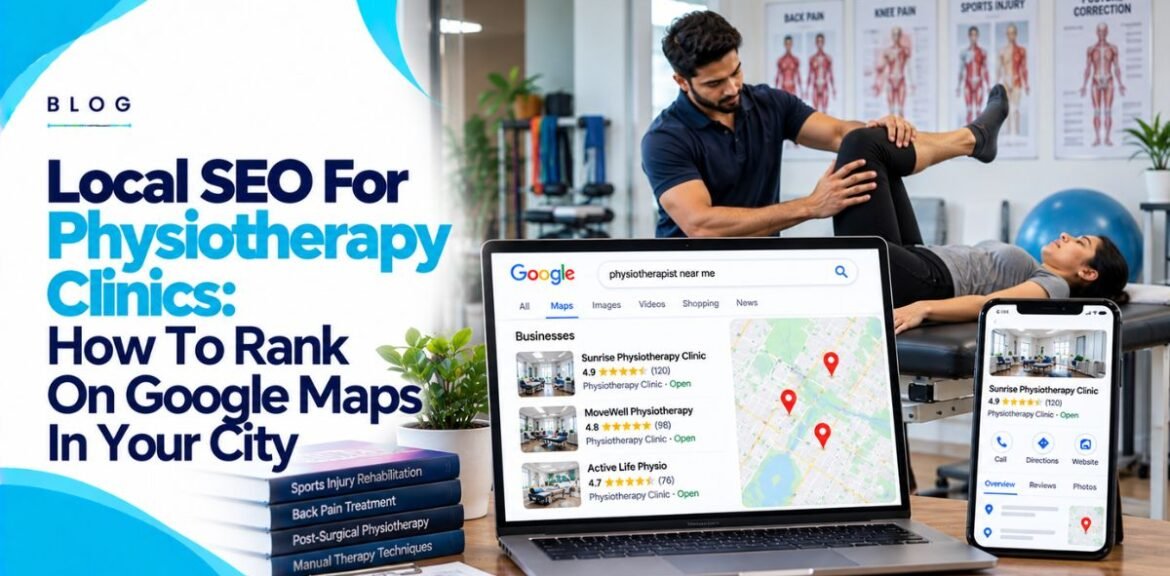
Alao Read:- Physiotherapy Clinics: How To Rank On Google Maps In Your City
Meta Ads: Awareness And Retargeting
Many people live with pain for months before acting, telling themselves it will settle on its own. Meta Ads keep your clinic visible while they hesitate, so that when they finally decide to do something, you are the name they already know. Retargeting is where Meta earns its budget for physio, bringing back people who visited your site or engaged with an ad but did not book, and gently reminding them until the timing is right. It is also strong for promoting specific services, a new therapist, or a seasonal offer to a local audience. Creative should be reassuring and educational rather than pushy, because physio patients respond to trust and understanding, not pressure or hard-sell claims.
The Mistake That Wastes Most Physio Ad Budgets
The single biggest waste in physio advertising is not the platform, it is sending every click to a generic homepage. Someone who searched for knee pain and clicks your ad should land on a page about knee pain, with the right information, the right reassurance, and an obvious way to book. When the ad promises one thing and the landing page talks about everything, the patient bounces and the click is wasted, no matter how good the targeting was. Matching each ad to a dedicated, condition-specific landing page is what turns clicks into appointments, and it often improves results more than raising the budget ever would. This is true on both Google and Meta.
Alao Read:- How To Get More Physiotherapy Patients Online
Which Should You Start With?
If your budget is limited, start with Google Ads to capture the patients already searching, because that intent is closest to a booking and gives you revenue quickly to reinvest. Get the tracking, the landing pages, and the follow-up working properly on Google first, since those same foundations make every other channel perform better. Once you have appointments flowing and reliable data on what a booked patient costs you, add Meta Ads for awareness and retargeting to widen the top of the funnel and re-engage people who are not ready yet.
Alao Read:- Physiotherapy Clinic Marketing
How To Split Budget As You Scale
A common progression is to lead with Google for demand capture, then shift a growing share to Meta as you build awareness and retargeting audiences large enough to work. There is no fixed ratio that suits every clinic, so let cost per booked patient guide the split rather than a rule of thumb. Move budget toward whichever platform is producing real, retained patients for your clinic, review it every month, and be willing to change the mix as your market and competition shift. The right split is the one your own numbers point to, not the one that worked for someone else.
Tracking Is What Makes Either Platform Work
Neither platform can be judged, or improved, without proper tracking. You need to know not just how many clicks or leads an ad produced, but how many became booked appointments and, ideally, completed treatment plans. Call tracking, form tracking, and a simple way to record where each new patient came from turn advertising from guesswork into a managed investment. Without it, you are flying blind and will inevitably keep spending on what looks busy rather than what actually books patients. With it, both Google and Meta become tools you can steer with confidence.
Alao Read:- Physiotherapy Clinics Reduce No-Shows And Patient Drop-Off
Frequently Asked Questions
Meta usually has a lower cost per click, but Google often has a lower cost per booked patient because the intent is higher. Judge by appointments booked, not click price.
You can, and many clinics start with Google alone. But relying on one platform caps your reach, Google captures existing demand while Meta creates and nurtures it.
They can, especially on Meta, if the creative implies a diagnosis or makes strong medical claims. Keep messaging honest and focused on the first step, a consultation, rather than promising outcomes.
Want Both Platforms Working Together?
Tycore runs Google and Meta for physiotherapy clinics as one system, demand capture plus retargeting, measured on patients booked, not clicks.
See How Tycore Markets Physiotherapy Clinics | Get A Free Lead Audit
Pingback:How To Get More Physiotherapy Patients Online In India