

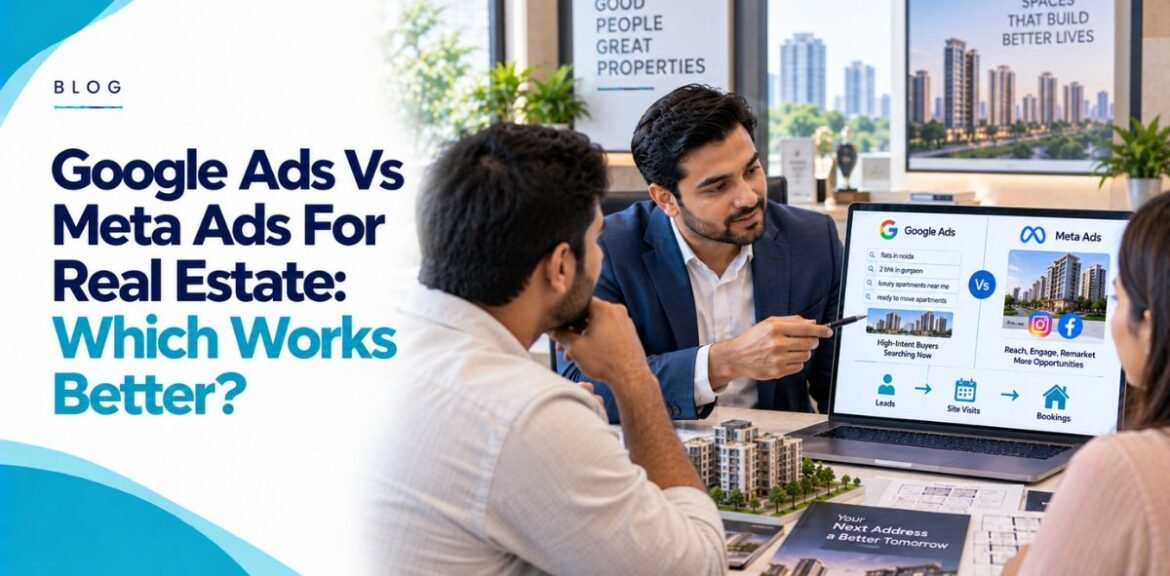

Which Is Better For Real Estate, Google Ads Or Meta Ads?
Google Ads is better for capturing buyers who are already searching for property; Meta Ads is better for creating demand and reaching investors by locality, budget, and interest. Neither wins outright, most real estate accounts perform best running both together: Google for high-intent capture, Meta for volume, awareness, and remarketing.
The Core Difference: Intent Vs Interruption
Google Ads is intent-based. Someone types what they want, and you appear. The buyer is already looking, so intent is high but volume is limited to whoever is searching that day. Meta Ads is interruption-based. You reach people scrolling Instagram and Facebook who fit your buyer profile but may not be actively searching yet. Volume is high and cost per lead lower, but average intent is softer because you are creating the interest rather than catching it.
Understanding this one difference decides how you use each, and why treating them as interchangeable is the most common and expensive mistake real estate advertisers make.
When Google Ads Wins
Reach for Google when the demand already exists and you simply need to be in front of it at the right moment:
- High Intent: Ready buyers searching for a specific project, locality, or configuration (“3BHK in [area]”).
- Immediate Demand: Resale and ready-to-move inventory, where the buyer wants it now.
- Speed With Quality: You need leads fast and can afford a higher cost per lead for better quality.
When Meta Ads Wins
Reach for Meta when you need to manufacture demand or find buyers who aren’t searching yet:
- Demand Creation: New launches and pre-launch waitlists, where you must create demand before anyone searches.
- Audience Targeting: Reaching investors and NRIs by budget band, interest, and locality.
- Volume Plays: You want high lead volume at a lower cost per lead and will qualify hard afterwards.
- Remarketing: Remarketing to people who visited your site or engaged but didn’t convert.
What About Cost Per Lead?
Meta usually shows a lower cost per lead on paper, but those leads need heavier qualification because many are not actively searching yet. Google leads cost more but arrive with stronger intent, so more of them convert to site visits. The honest comparison is not cost per lead, it is cost per qualified lead, and ultimately cost per site visit.
A ₹200 Meta lead that never visits is more expensive than a ₹600 Google lead that books a visit. Judge both platforms on that downstream number, not the vanity figure the dashboard shows you first.
The Winning Combination
For most real estate businesses the answer is not either/or. Run Meta to fill the top of the funnel and build audiences, run Google to catch high-intent searchers, and use remarketing across both to stay in front of buyers through a long decision cycle, property is rarely an impulse purchase, and buyers often take weeks or months.
Each platform covers the other’s blind spot: Meta finds people before they search, Google catches them once they do, and remarketing keeps you visible in between. Run alone, each leaks demand the other would have caught.
A Simple Starting Split
- Launch: New project launch: lead with Meta (roughly 60–70%), support with Google brand and category search.
- Ready Stock: Resale or ready inventory: lead with Google, support with Meta remarketing.
Treat these as starting points, then shift budget toward whichever platform delivers cheaper qualified leads for your specific project.
Mistakes That Waste Budget On Both
Even the right platform choice fails if the fundamentals are wrong. These three mistakes drain budget on Google and Meta alike:
- No Focus: Targeting too broadly, so junk leads flood in.
- Wrong Destination: Sending ad clicks to a slow homepage instead of a dedicated landing page.
- Slow Response: No instant follow-up, so leads go cold before contact.
Fix these first. A tight audience, a fast landing page, and instant follow-up will do more for your results than switching platforms ever will, the platform is only as good as the system you point it at.
Frequently Asked Questions
Meta usually has a lower cost per lead, but those leads need more qualification. Compare cost per qualified lead and site visit, not the raw cost per lead, before deciding.faq
Meta first. A launch needs demand created before people search, and Meta’s locality and interest targeting is built for exactly that. Add Google for the buyers who do search.
Yes. Sending paid traffic to a slow or general homepage wastes budget. A fast, focused landing page built to capture WhatsApp and form leads dramatically improves conversion.
Enough to gather meaningful data on one platform before splitting across two. Set the budget against a target cost per qualified lead rather than a flat number.
Not Sure How To Split Your Ad Budget?
Tycore plans and runs Google and Meta campaigns for real estate, structured by project and locality, and judged on qualified leads and site visits, not clicks.
See Our Real Estate Digital Marketing Approach, Or Book A Free Ad Audit.
Pingback:Real Estate Project Launch Marketing Playbook