

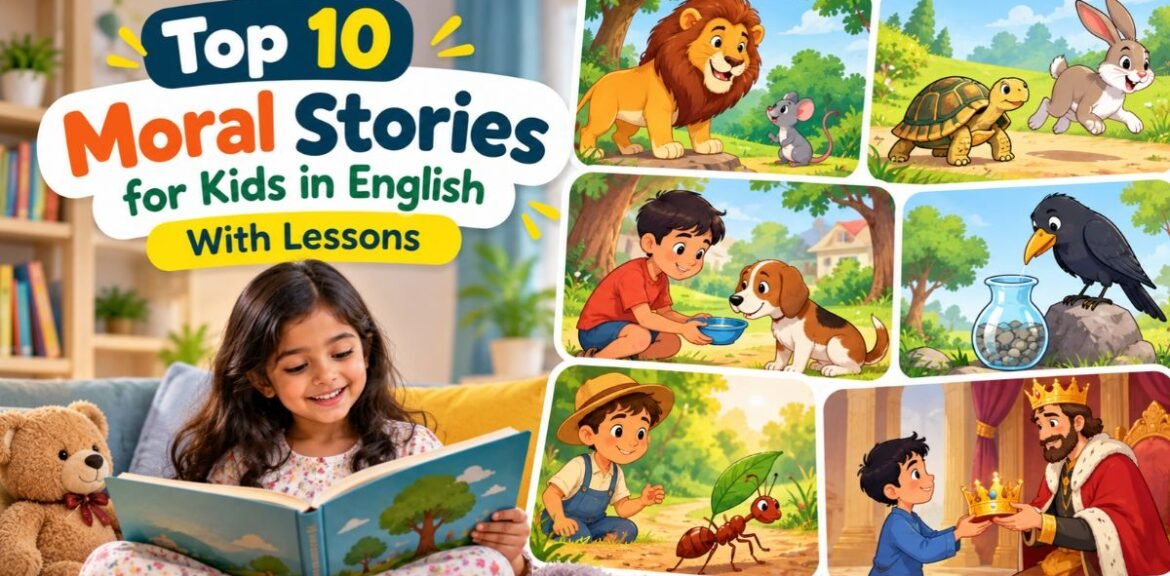

Moral stories have been used for generations to teach children important life values in a simple, memorable way. A good story often teaches lessons that direct instruction cannot — through characters and situations children can relate to.
Here are 10 classic moral stories every child should hear, along with the key lesson each one teaches.
1. The Honest Woodcutter
A woodcutter loses his axe in a river, and a god tests his honesty by offering gold and silver axes first. Lesson: honesty is always rewarded.
2. The Thirsty Crow
A thirsty crow uses pebbles to raise the water level in a jug to drink. Lesson: intelligence and patience solve problems better than giving up.
3. The Tortoise and the Hare
A boastful hare loses a race to a slow but steady tortoise. Lesson: slow and steady effort wins over overconfidence.
4. The Boy Who Cried Wolf
A shepherd boy repeatedly lies about a wolf attack until no one believes him when it’s true. Lesson: lying destroys trust.
5. The Ant and the Grasshopper
An ant works hard all summer while a grasshopper plays, and only the ant is prepared for winter. Lesson: hard work and planning pay off.
6. The Lion and the Mouse
A small mouse helps free a mighty lion from a trap after the lion once spared its life. Lesson: kindness is never wasted, no matter how small.
7. The Golden Goose
A farmer kills his goose that lays golden eggs out of greed, losing his fortune. Lesson: greed can destroy what we already have.
8. The Fox and the Grapes
A fox cannot reach grapes and decides they must be sour anyway. Lesson: don’t dismiss what you can’t have as worthless.
9. The Wise Old Owl
A wise owl teaches a young bird the value of listening and learning from experience. Lesson: wisdom comes from careful observation and patience.
10. The Two Friends and the Bear
One friend abandons another during a bear encounter, teaching that a true friend stays through danger. Lesson: true friendship is tested in difficult moments.
💡 Reading one moral story with your child each week, and discussing the lesson afterward, builds strong values over time without ever feeling like a lecture.
How to Use Moral Stories Effectively at Home
- Read the story together, then ask your child what they think the lesson is
- Connect the lesson to a real-life situation your child can relate to
- Avoid over-explaining — let your child arrive at the meaning themselves first
- Revisit favourite stories occasionally to reinforce their lessons
At What Age Should Kids Start Hearing Moral Stories?
Moral stories are suitable from age 3 onward, with simpler stories for younger children and more nuanced ones introduced gradually through the primary school years.
FAQ
Classics like The Honest Woodcutter, The Thirsty Crow, and The Tortoise and the Hare are excellent, widely loved moral stories with clear life lessons.
Read the story together, then ask your child what lesson they think it teaches, connecting it to a real situation they can relate to.
Moral stories are suitable from age 3 onward, with simpler stories for younger children and more nuanced ones introduced gradually.
Stories let children learn lessons through relatable characters and situations, which is often more memorable and less preachy than direct instruction.
It’s often better to ask your child what they think the lesson is first, letting them arrive at the meaning themselves before guiding further if needed.